
Same plan. Different questions.
There’s a point in early planning when a project starts to feel real. A sketch gives people something to react to. They can picture how a building might serve students, welcome guests, or make it easier for patients to get care. That’s a good time to ask what it will take to make the project work once the doors open.
Give people something specific to weigh in on
When a company puts a prototype in front of the people it hopes will use it, watching them try it can reveal something the team hadn’t considered. An owner can do something similar with a preliminary building plan. Ask students and staff to walk through how they’d use an academic building on a typical evening. The team may discover that rooms meant to stay open late are spread across three floors, each requiring staff coverage.
Whether it’s a campus building, a hotel, an office renovation, or an outpatient clinic, walking through a typical day with the people who will use and run the space can show where the plan needs another look.
Make it clear what’s still open
Once a concept gains support, it’s natural for the conversation to shift toward how to deliver it. If a meeting is about refining the layout, a colleague who sees a staffing concern may reasonably assume it belongs in a later discussion. People with relevant experience may already be at the table. A clear invitation can help them bring that experience into the decision.
“Before we go further, is there anything we’ve treated as settled that you think we should look at again?”

What did you see first?
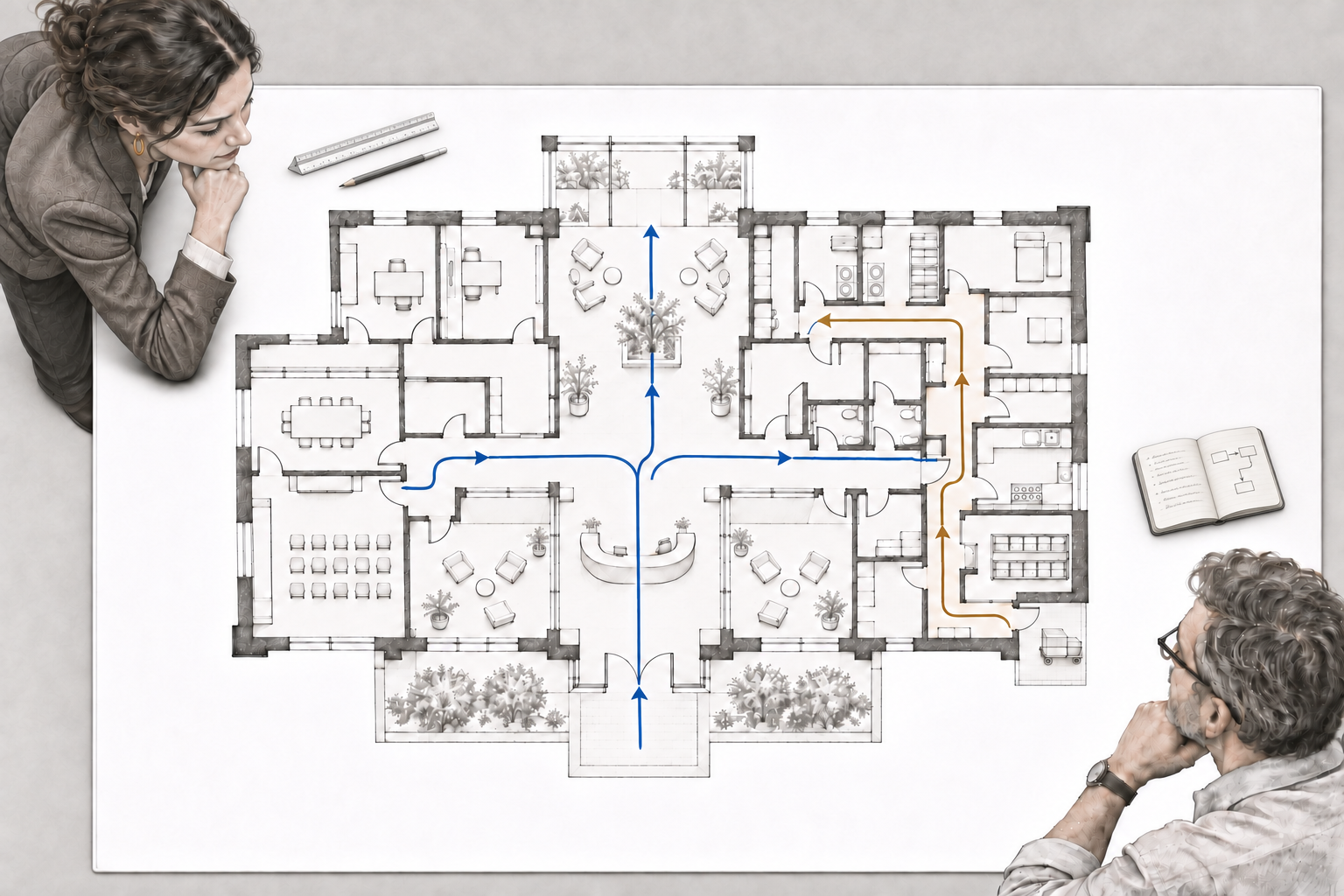
The same thing can happen in a plan review. An architect may see a straightforward route from the service entrance. The person who moves supplies every day may see a tight turn that will slow down each delivery.
An independent perspective can help the people already leading the project make the most of that conversation. Someone with relevant experience and some distance from the original recommendation can ask how the team arrived at an assumption, whose experience could help test it, and what the owner might do if it changes.
At the next planning meeting, pick one assumption that could change the investment. Ask the people who will fund, deliver, and operate the project to look at it together. The discussion may prompt a change in scope or timing, or give leadership more confidence in the direction already chosen. Either way, the owner can decide what it’s prepared to support long after opening day.
Further Reading
Whole Building Design Guide, Architectural Programming. A building-specific reference for involving users and other stakeholders early, when the team is defining what the building needs to do. WBDG - Whole Building Design Guide
UK Government Digital Service, Using Moderated Usability Testing. Supports the prototype analogy through a simple practice: watch people try to complete a task and see where they hesitate or run into problems. GOV.UK
UK National Infrastructure and Service Transformation Authority, Guidance to Conducting Gateway Assurance Reviews. A capital-project reference for how independent reviewers test assumptions through conversations with the project team.